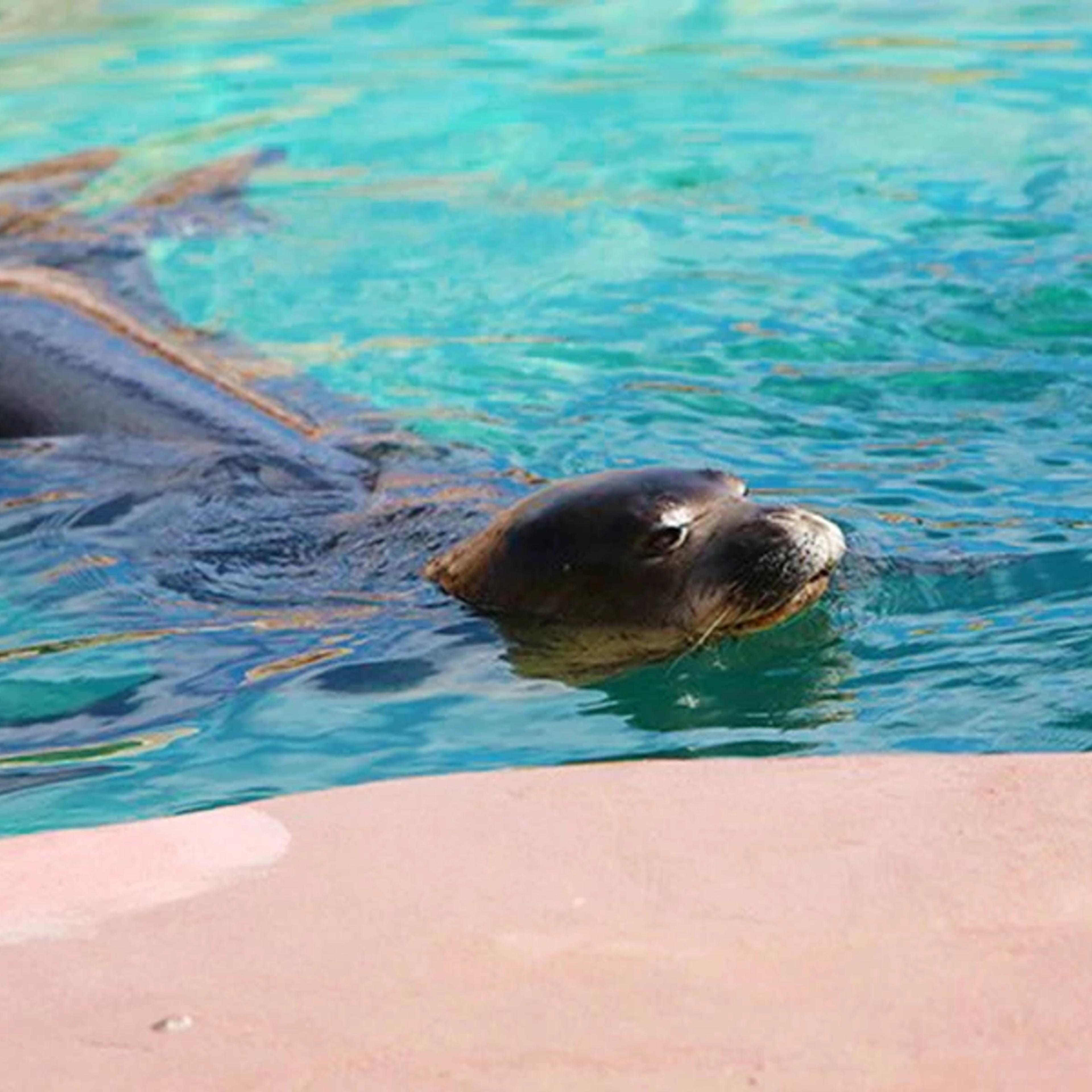
Hawaiian Monk Seal
What Are Pinnipeds?
Seals, along with Seal Lions, and the Walrus; belong to the family called Pinnipeds.
Historically, there were three different species of monk seals in the world consisting of the Mediterranean, Caribbean, and Hawaiian monk seals. The Caribbean monk seal was declared extinct in 1996 with the last sighting of this species in 1952. Today, the status of the Mediterranean monk seal is critically endangered with around 600-700 left (NOAA) and the Hawaiian monk seal is listed as endangered with about 1,570 individuals remaining here in the islands (NOAA). The Hawaiian monk seal is commonly found along the Hawaiian island chain with the majority of the population located along the Northwestern Hawaiian Islands.
Some of the biggest threats to the Hawaiian monk seals today are shark attacks on juveniles, limited foraging success or starvation due in part to over fishing, marine debris (entanglement and ingestion), male mobbing of females; in this unusual behavior the male seals will “gang up” and kill females and young seals for no apparent reason, human disturbance such as harassing, feeding, boats, fishing hooks and others.
What's the Difference Between Seals & Sea Lions?
There are a few key characteristics that make seals different from sea lions. First of all, seals do not have ear flaps; they only have small holes for ears. Also seals use their hind flippers to propel themselves through the water and their front flippers to steer; with sea lions, it is the opposite. Also seals cannot prop themselves up on those front flippers, so they can only haul around on land like an inchworm. Pinniped means fin, or flipper, footed. All Pinnipeds are Mammals.
What Are the Characteristics of a Mammal?
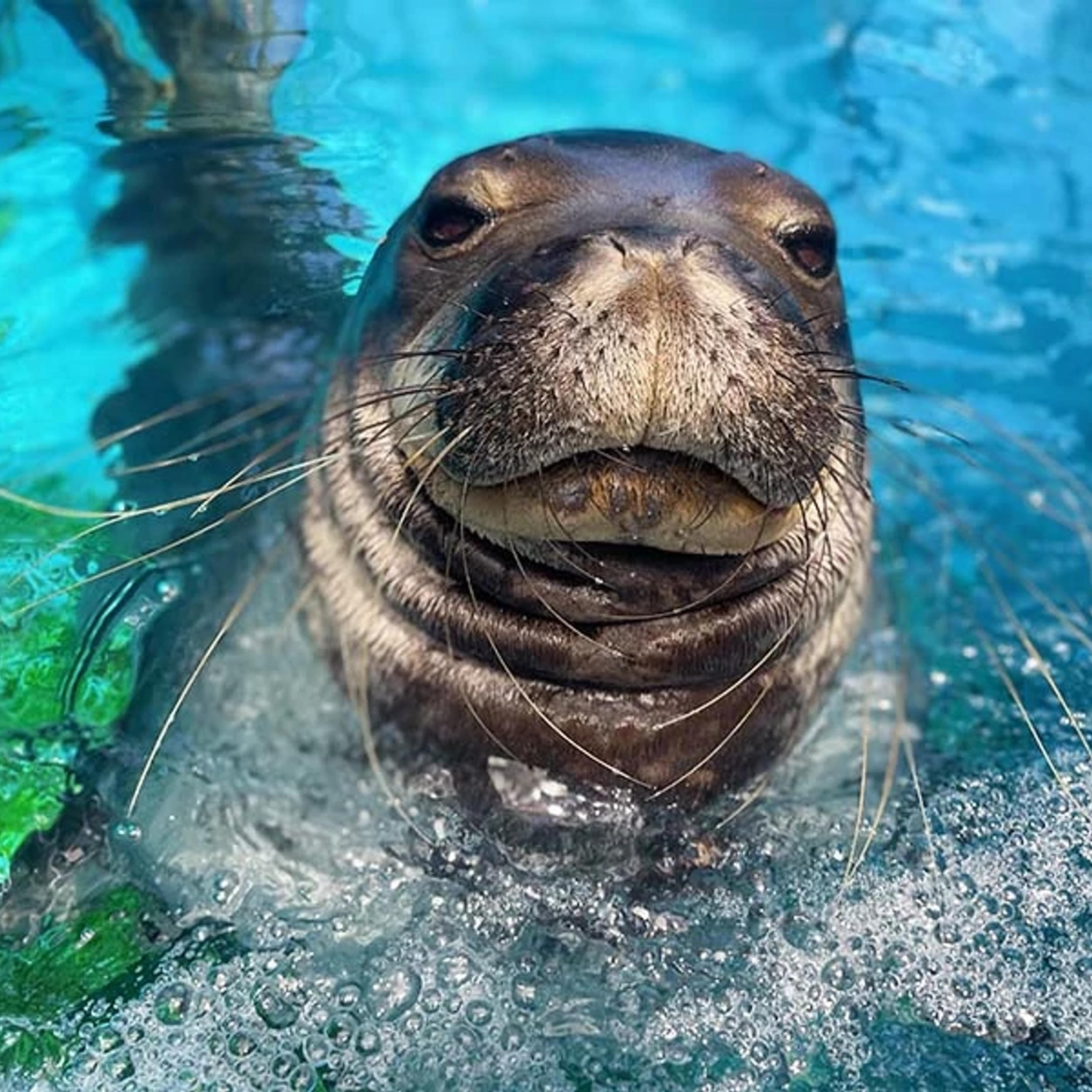
Breathe air: Monk seals breath in the opposite way that humans do. Our nostrils are naturally open, and we don’t have the ability to close them. Monk seal’s nostrils are naturally closed, and she has to use muscles to open them to breathe. This is because monk seals spends most of her time in the water.
Hair/fur: Their fur helps to keep them warm. You may notice that sometimes monk seals have green growing on their fur. This is algae! It grows naturally on monk seals in the ocean. Each year, monk seals shed the top layer of their skin along with their old fur coats in a catastrophic molt. This lasts approximately two weeks (NOAA). During the molting process the old layer of fur and skin begins to peel off, revealing a nice new fur coat underneath. A freshly molted monk seal will have a light black and gray top coat, and a beautiful silvery belly. This habitat, like all of our habitats at Sea Life Park, contains real ocean water. Sea Life Park pumps about 12 million gallons of fresh sea water through our habitats every day. We do not put any kind of chemicals into that water, so algae grows naturally in our habitats. These algae called diatoms actually absorb harmful sunlight and produce atmospheric oxygen.
Warm Blooded: A warm blooded animal maintains a constant body temperature, unlike cold blooded animals that use the environment to maintain their body temperature.
Live Birth: Seals and sea lions give birth to live pups.
Drink Milk: Sea lions and seals also have blubber that helps keep them warm besides their fur. In order to build up their blubber quickly, a monk seal’s milk needs to contain a lot of fat.
How Much Do Monk Seals Weigh?
Male monk seals typically weigh between 400-500 pounds and female monk seals generally weigh 400-450 pounds, but can reach up to 600 pounds during pregnancy. The gestation period is approximately one year, and occurs on average every other year starting at 7-10 years of age. Pups are born on the beach with the mother staying with the pup for approximately 5-6 weeks in order to nurse. During the nursing period, the mother will not leave the pup to eat and eventually will lose up to 50% of her body weight; and the pup will gain about 4 times its original birth weight, reaching a weight of approximately 140 pounds. After the 5-6 week nursing period the mother will return to the sea to find food and leave the pup to fend for itself. During the weaning process, the pup must learn to catch its own prey, and the pup will steadily lose weight only about 100 pounds around 1 year of age.
What Do They Eat?
Hawaiian monk seals are opportunistic feeders, so they go after whatever is easiest and most available for them to catch. Their prey includes a variety of fish, crustaceans, eels, octopus and shellfish; all of which are found close to the sea floor. Monk seals do not chew their food like we do, instead they swallow their food whole! Monk seals have 32 teeth and an extremely strong jaw that they can use to crush the bones and shells of their prey.
Finding food is one of the monk seals greatest challenges, and sometimes they may have to dive to great depths to find their next meal. The greatest recorded dive depth was 543 meters, or 1781.5 feet, which was documented by video from a small submersible submarine. While diving and foraging, monk seals have the ability to stay underwater for up to 25 minutes with the average dive being 6-7 minutes.
How Do Monk Seals Get Their Name?
It is from their fur coat that many believe the monk seal got its name. It is believed that the monk seals fur around its face mimicked the look of a monk’s robe. Another possible origin for the name is that the seals lead solitary lives, much like monks do. When it comes to animal trainging, we use a technique called “operant conditioning”. This training method enables us to train the animals to undergo numerous medical and husbandry behaviors. These behaviors provide us with a method of closely monitoring her health status, thereby providing optimal care. These behaviors allow us to collect blood samples, body weight measurements, and complete physical inspections of the body, mouth and eyes.
Conservation
Since the Hawaiian monk seal is an endangered species, they are federally protected under the endangered species act. It is considered a federal offense to touch, feed, or harass a monk seal in any way; doing so could result in fines. Monk seals spend a lot of time on the beach basking in the sun. They will do this to rest, escape a predator, warm up, or get ready to give birth to their pups. If you ever happen to come across a seal on the beach, you want to make sure that you keep your distance giving them plenty of space. Another way that you can help to preserve this species is by making sure you never litter, and always remember to reduce, reuse, and recycle!
The Park has assisted endangered Hawaiian monk seals through an important program that brought in underweight or abandoned seals from the wild and rehabilitated them. Those crucial efforts—along with the impact of NOAA’s Hawaiian Monk Seal Recovery Plan and the work of other key agencies coming together to make a difference—are encouraging Monk Seal population growth.